The Warshonomics: What is Different?
- Dương Yên Thy
- 7 thg 3
- 5 phút đọc
by Dương Yên Thy, Nguyễn Đức Khánh An, Phạm Gia Phú
Summary
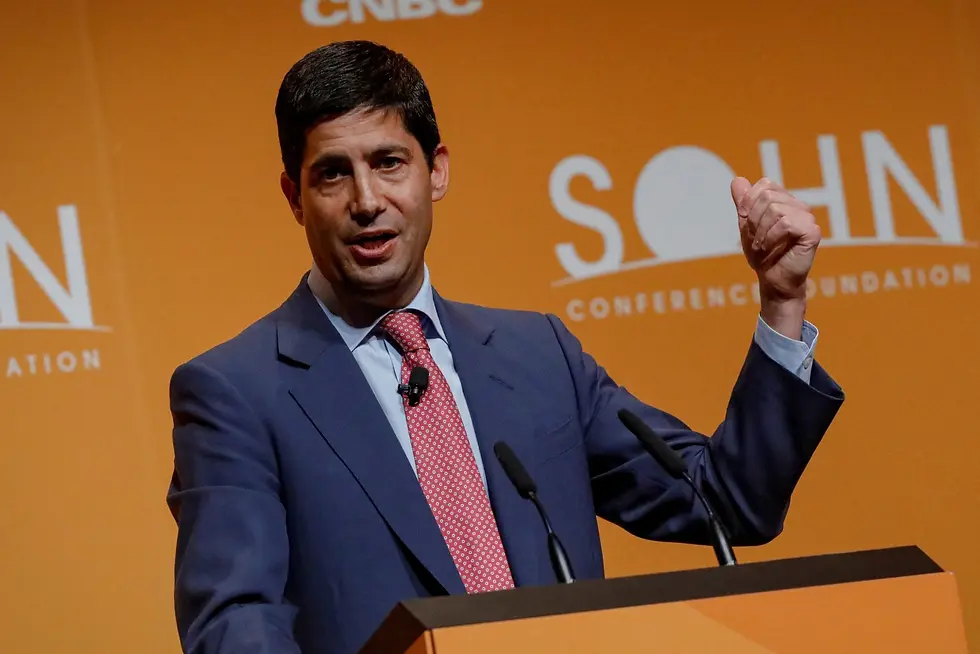
Kevin Warsh is nominated to be the next chairman of the Federal Reserve, succeeding Jerome Powell.
Drastic changes to the economy relative to the previous economy.
Rate cuts and balance sheet reduction are to be expected under Kevin Warsh lead.
Kevin Warsh: The Next Chairman
He is no stranger to the macroeconomic world. After a lengthy career as a financial advisor, Kevin Warsh would become the youngest person ever to serve on the Federal Reserve during the 2004 George W. Bush administration. Mr. Warsh was nominated to serve on the Board of Governors, representing for the Group of Twenty (G20) and an emissary to emerging and advanced economies in Asia [1].
Thus, it is expected that Kevin Warsh will be the top candidate for the powerful Fed chair. As Jerome Powell’s term expires in May 2026, Mr. Warsh was nominated by President Trump to succeed the Federal Reserve Chair, which will give him influence on monetary and banking policies [2]. Trump’s reason for the pick is simple: he needs someone to reduce the cost of living, to stabilize the price. That is why President Trump criticized Mr. Powell for not lowering interest rates earlier, and launched a federal investigation on him concerning the multibillion-dollar renovation of the Fed’s Washington headquarters [3]. Trump’s announcement on Truth Social, much like any Fed announcements, caused some prices to drop, including gold and silver prices which plummeted by 10% and 30%, respectively [4].
Warsh vs. Powell: What are the Economic Differences?
With the dual-mandate policy actions to maximize employment and stabilize prices, there are expected to be differences in the economic approaches between Jerome Powell and Kevin Warsh. It is worth looking back on the economy under Jerome Powell’s approach since 2018.
Under Powell’s chairmanship, the Federal Reserve employed a data-dependent approach. A more dovish strategy - opting for economic growth - has been evident from the unchanging interest rate of 4.5% throughout 2025 despite pressures from the President of the United States, Donald Trump, to cut interest rates [5]. In response to the financial impacts of the COVID-19 pandemic, Powell adopted a series of policy actions to expand the US balance sheet in the early 2020s, which included direct purchase of corporate bonds and direct lending [6]. Eventually, this action was followed by bubbles in asset prices, for which Powell received criticism for high levels of quantitative easing.
Most recently, Powell has defended the Fed’s independence from political forces by keeping the interest rate high inflation [7]. During his speech at Jackson Hole in August 2025, Powell reported on the economic situation, in addition to announcing the public results of the monetary policy and the Fed’s framework reviews. An inflection point was seen in 2024, where the policy rate stood for more than a year [8]. Inflation was brought down, and the sustainable development between demand and supply was fostered. While the risks to inflation cooled, unemployment had risen [9]. Due to the high tariffs, which remade the trading system, and the tight immigration policy adopted, labor force growth stagnated [10]. A marked slowdown in demand and supply for workers raised the risks of unemployment. High tariffs had also pushed up prices for goods and services. Therefore, it is of paramount importance to create well-anchored inflation expectations, which means gaining the public’s confidence that the inflation rate will stay close to the central bank’s target in the long run, so that the possibility of wage-price spirals is lowered. This supports a gradual response from the Fed, rather than a tight one that potentially raises unemployment quickly.
In stark contrast, Warsh has publicly criticized the Fed for slow responses and its over-dependence on data. Instead, Warsh opts for long-run structural changes to tailor policies, as he considers short-term statistics may reflect temporary, cyclical changes. As being well-known for his hawkish approach - one that restricts economic growth by, for instance, raising interest rates and using quantitative tightening - the possibility of a shrink in the US balance sheet is evident, according to his previous extensive skepticism on the large size of the balance sheet. As Kevin Warsh’s nomination was put forward by the US President and his desire to cut the interest rate, it is highly likely that there will be a lower rate. However, depending on the economic outlook, Warsh may return to his hawkish approach.
What Will the Fed’s Monetary Direction Be?
It should be noted that Warsh is considered as a supply-side optimist, believing productivity can be spurred with deregulation and tax cuts, giving him a great justification to dramatically decrease the Fed’s interest rates despite the fact that he had, for so long, been hawkish on interest rates, advocating for higher interest rates and tighter monetary policies. However, whether these lower rates remain or not will depend on whether the productivity gains are materialised from these drastic decreases or not. Inflation rates will also play a factor in whether these lower rates will stick as if inflation remains sticky, Warsh might reverse the cut on rates [11].
The moment where the interest rate cut is also up for consideration for many political economists. After all, Warsh is nominated by President Donald Trump to be the Chairman of the Federal Reserve [12], and so it should be expected that the drastic reduction in the basic rates will occur close to election times to secure the President’s publicity as an improver of the economy, which is a result of the decrease in lending rates, providing him and his Republican Party an advantage. It should also be noted that a key reason for Trump’s actions against current Fed Chairman Jerome Powell including the nomination of Warsh and the investigation into the Fed renovation is as a result of the Chairman’s decisions to only slightly cut and, just recently, keep the basic rate the same without changing, a cautious approach given the inflation effects caused by President Trump’s tariffs on imported products, so there is a very high possibility of Warsh, a move to cozy up with the President, drastically cut interest rates to accelerate the economy in favour of the White House occupant.
Of course, it shouldn’t be a surprise if the Fed shrinks its balance sheets during Warsh’s time as Chairman, as he had openly advocated for such an approach to the American central bank. He had, for a long time, criticised the Fed’s ever-enlarging asset holdings as a worrying sign on the central bank’s impact on the American economy. Not only that, he argues that the shrinking of the Fed’s balance sheets would make it easier to maintain lower rates [13]. This means if he follows through with this plan, it is highly likely that he would offload a significant stock of the Fed’s assets, which consists primarily of US Treasury debt in an act of quantitative tightening, which will also balance the inflation effects caused by the decreasing of the basic rates. However, such actions might also hinder the economic growth from the lower interest rates, rendering the rate decrease ineffective.
Citations:
[1]: “Kevin Warsh”. Federal Reserve History. 2026. URL https://www.federalreservehistory.org/people/kevin-m-warsh
[2]: “Trump names Kevin Warsh as his pick to replace Jerome Powell at the Federal Reserve”. CNN. 2026. URL https://edition.cnn.com/business/live-news/fed-chair-nominee-kevin-warsh-01-30-26
[3]: Hughes, Susan. “Explainer: Understanding the Department of Justice’s investigation into Federal Reserve Chair Jerome Powell”. Harvard Kennedy School. Jan 21, 2026. URL https://www.hks.harvard.edu/faculty-research/policy-topics/public-finance/explainer-understanding-department-justices
[4]: Murray, Connor. “Gold And Silver Price Plummets Don’t Worry Analysts—Here’s Why”. Forbes. Feb 2, 2026. URL https://www.forbes.com/sites/conormurray/2026/02/02/gold-and-silver-price-plummets-dont-worry-analysts-heres-why/
[5]: “US Interest rates”. Federal Reserve, illustrated by Trading Economics. 2026. URL https://tradingeconomics.com/united-states/interest-rate
Kaye, Danielle. “US Fed holds interest rates and defends independence. BBC. Jan 29, 2026. URL https://www.bbc.com/news/articles/c9wxedz9v22o
[6]: Leonard, Christopher. “How Jay Powell’s Coronavirus Response Is Changing the Fed Forever”. TIME. Jun 11, 2020. URL https://time.com/5851870/federal-reserve-coronavirus/
[7], [8], [9], [10]: Powell, Jerome. “Monetary Policy and the Fed’s Framework Review”. Federal Reserve Board. Aug 22, 2025. URL https://www.federalreserve.gov/newsevents/speech/powell20250822a.htm
[11], [12], [13]: Hansen, Sarah. “What Kevin Warsh as Fed Chair Could Mean Interest Rates”. Morning Star. Feb 3, 2026. URL https://global.morningstar.com/en-nd/economy/what-kevin-warsh-fed-chair-could-mean-interest-rates


Bình luận